
The floor you end up with depends more on who installs it than on the product itself. Two quotes can list “epoxy flooring” and describe entirely different jobs — different preparation, different coating systems, different thickness, different warranty. Choosing the right epoxy flooring contractor in Brisbane means knowing what questions to ask so you can actually compare what’s being offered, not just the number at the bottom of the page.
This guide walks through what to check before you hire, how to read a quote properly, and the warning signs worth knowing about.
Check Relevant Licensing and Insurance
Depending on the value, scope, and contracting arrangement of the project, the contractor may need to hold an appropriate QBCC licence. It’s worth confirming current requirements with the QBCC directly and checking the specific licence class for floor finishing and covering work, rather than taking a contractor’s word for it.
The same goes for insurance. It’s reasonable to ask whether a contractor holds public liability cover appropriate to the size of the job, and to ask for that to be put in writing rather than just mentioned in conversation. A contractor who’s genuinely set up properly won’t mind being asked either of these things.
Look for Experience With Similar Projects
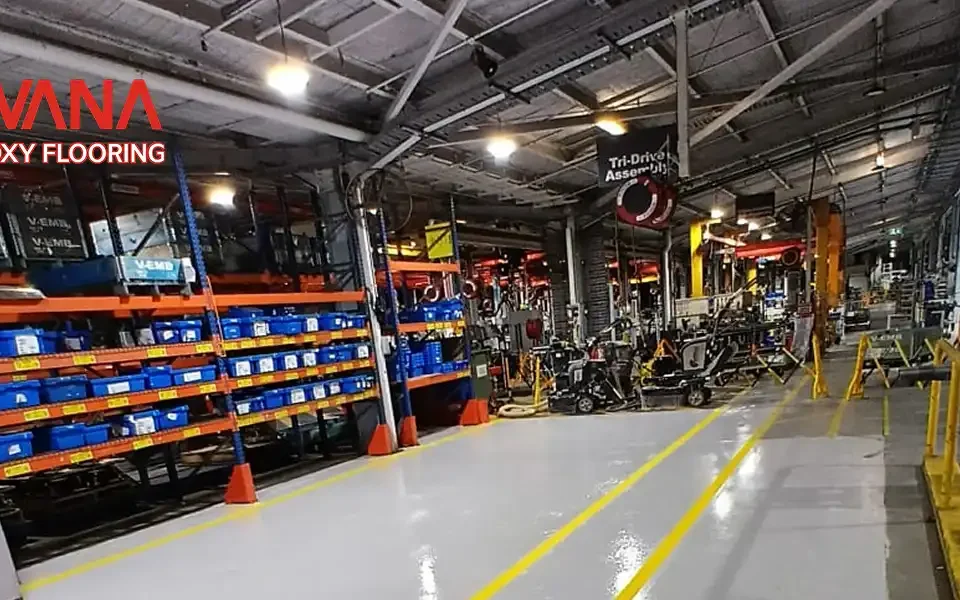
A residential garage, a commercial kitchen, and a warehouse floor all put different demands on a coating system — different traffic, different chemical exposure, different hygiene requirements. Experience in one doesn’t automatically transfer to another. When you’re comparing contractors, it’s worth asking specifically about work they’ve done in a space similar to yours, rather than epoxy flooring in general.
Ask How the Concrete Will Be Prepared
This is where a lot of the eventual result gets decided, and it’s a fair thing to ask about in detail before you commit to anyone.
A proper process usually starts with a site inspection — checking for existing coatings, contamination like oil or grease, visible cracks, and the general condition of the slab. Ground-level slabs, or slabs with any history of water exposure, may also need to be assessed for moisture, since moisture pushing up through concrete that hasn’t been checked can affect how well a coating bonds.
From there, preparation typically involves diamond grinding or shot blasting to remove contaminants and old material and create the surface profile a coating needs to adhere properly, along with patching any cracks or damage. Active cracks or signs of structural movement need to be assessed on their own merits — epoxy can protect and improve a sound concrete surface, but it isn’t a structural repair, and movement in the slab underneath can reappear through the coating over time.
If a contractor can’t describe their preparation process beyond “we’ll prep the floor,” that’s worth pressing on.
Ask What Complete Coating System Is Being Quoted
“Epoxy” on its own isn’t a full specification — it describes a category of product, not a finished system. A proper quote should identify what’s actually being applied: the primer, the base or build coat, any decorative flake or aggregate broadcast, and the topcoat, along with the number of coats and the total intended thickness. The next coat in any system is normally applied once the preceding layer reaches the required recoat stage, and within that specific product’s manufacturer-specified recoat window — not on a fixed schedule that applies to every job.
It’s also worth asking what the system is actually rated for. Slip resistance, UV stability, and chemical or abrasion resistance aren’t automatic properties of “epoxy” as a category — they depend on the complete system: the aggregate used, the topcoat, the thickness, and how it’s installed. A system suited to a light-traffic living room isn’t necessarily the same one you’d want in a workshop or a wet, high-traffic kitchen, and a contractor should be able to explain why they’re recommending one system over another for your specific space.
Compare Itemised Quotes, Not Just the Final Number
Two quotes at different prices might reflect two genuinely different jobs — different preparation, different coating thickness, different exclusions — or one might simply be missing steps the other includes. An itemised quote makes that visible; a single lump-sum figure doesn’t.
| Quote item | What should be explained | Possible warning sign |
|---|---|---|
| Surface preparation | Method (grinding, shot blasting), crack repair, moisture assessment where relevant | Preparation not mentioned or described only as “floor prep” |
| Coating system | Primer, base coat, aggregate or flake, topcoat, number of coats | Just says “epoxy coating” with no system detail |
| Total thickness | Intended dry film thickness for the system quoted | Not specified or vague when asked |
| Scope and pricing | Preparation, repairs, coating system, optional work, GST, and exclusions | A lump-sum price with no clear description of the work included |
| Timeline | Start date, expected duration, curing and return-to-service estimate | No timeframe given, or an unusually fast promise |
| Exclusions | What isn’t included — furniture removal, extra repairs if damage is found, etc. | Exclusions only surface after the job starts |
| Warranty | Workmanship and product warranty terms and conditions, separately | No written warranty information at all |
A quote that’s noticeably cheaper isn’t automatically a poor one — but if it’s cheaper because preparation or coating layers have been left out, that’s not really the same job, and it’s worth clarifying before you compare on price alone.
Understand the Timeline and Downtime
How long a job takes depends on the product, coating thickness, temperature, humidity, ventilation, and general site conditions — there’s no single figure that applies across every job. For a home, that might mean the garage or room being out of use for a period; for a business, it might mean staged work or after-hours installation to limit disruption. A contractor working properly to a product’s data sheet should be able to give you a realistic estimate for your specific job, including how long before the floor can safely go back into use, rather than a generic promise.
Review the Warranty
Two separate things are usually worth understanding here: the product warranty from the coating manufacturer, and the workmanship warranty from the contractor covering their own installation. Ask whether any manufacturer product warranty applies and what separate workmanship warranty the contractor provides — not every product comes with a direct or transferable manufacturer warranty, so it’s worth confirming rather than assuming one exists. Ask what each one actually covers, how long it runs for, and check whether the warranty excludes damage linked to unsuitable cleaning products, slab moisture, structural movement, UV exposure, or failure to follow the contractor’s aftercare instructions. A contractor who can explain this clearly, rather than gesturing vaguely at “a warranty,” is generally easier to trust with the rest of the job too.
Review Similar Projects and Customer Feedback
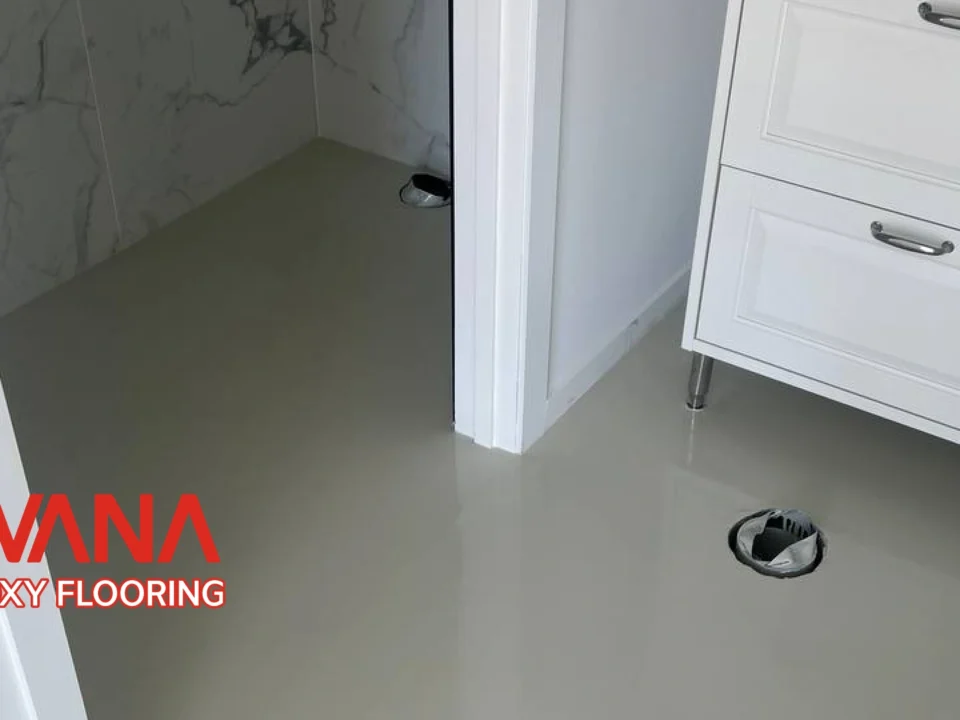
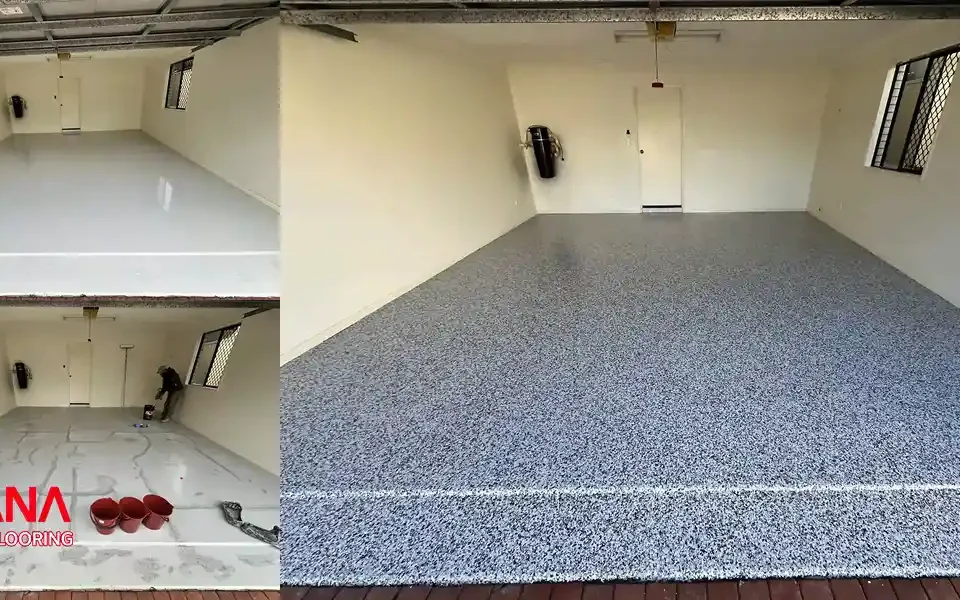
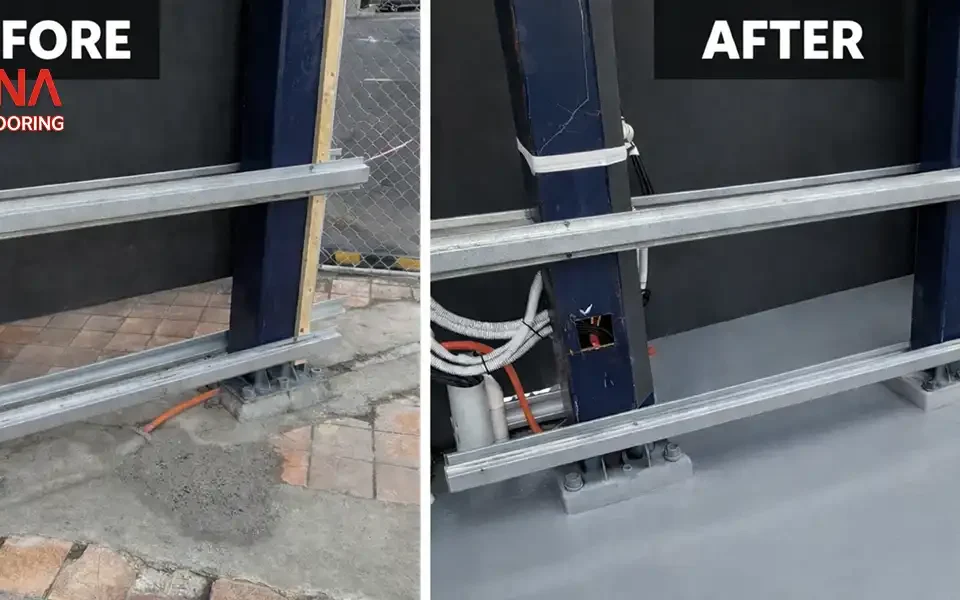
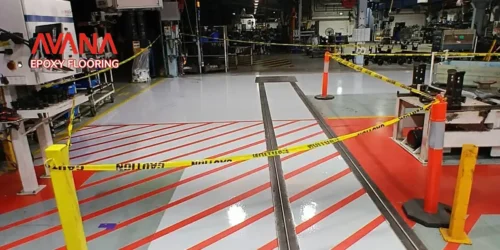
Ask to see examples of completed work in spaces similar to yours, ideally with before-and-after photos rather than finished shots alone. Recent reviews can show how the contractor currently operates, while a longer review history can help demonstrate consistency over time. It’s worth paying attention not just to the finished floor but to what people say about communication, timing, and how any issues were handled afterward — that tells you more about what working with them will actually be like than the photos do.
Brisbane-Specific Questions Worth Asking
Brisbane’s warm temperatures and humidity affect a coating’s pot life, recoat timing, and curing conditions on site, so it’s fair to ask how a contractor manages application in warmer or more humid weather rather than assuming every job runs the same regardless of season. For any area exposed to direct sun — a patio, an alfresco area, an open garage — ask specifically whether the proposed system is suited to outdoor UV exposure, since not every coating is. For wet areas such as bathrooms or commercial kitchens, ask how slip resistance is being achieved in that particular system.
It’s also worth asking about the slab itself — its age, any history of water exposure, and whether that’s something the contractor checks as standard. Not every property has moisture or flood-related issues, but it’s a reasonable thing to have assessed rather than assumed either way. Finally, ask how they’ll schedule around your household or business — particularly if the space needs to stay partly usable during the work.
Warning Signs to Watch For
- A vague quote that doesn’t name the preparation method or coating system
- No mention of moisture assessment for a slab that may be affected
- No written scope of work
- Curing or turnaround promises that sound unrealistically fast
- No warranty information in writing
- No examples of relevant past projects
- Pressure to sign or decide immediately
- A much lower quote with no explanation for what’s different about it
None of these on their own necessarily rules a contractor out, but a pattern of several is worth taking seriously.
Questions to Ask Before Hiring
- What experience do you have with a project like mine specifically?
- What licence class and insurance do you hold for this scope of work?
- How will you prepare the concrete, and will you assess it for moisture or cracks first?
- What’s the complete coating system — primer, base coat, aggregate, topcoat?
- What’s the total intended thickness of the finished floor?
- What slip-resistance, UV, or chemical-resistance rating does this system have, if relevant to my space?
- Can I get an itemised quote rather than a single figure?
- What’s excluded from the quote?
- What’s the realistic timeline, including curing and return-to-service?
- Can you work around my household or business hours if needed?
- What does the workmanship warranty cover, and for how long?
- What does the product warranty cover, and what would void it?
- Can I see examples of similar completed projects?
- Can I speak to a recent customer or see recent reviews?
- What happens if an issue comes up after the job is finished?
Making the Final Decision
An epoxy flooring contractor in Brisbane worth hiring should be able to answer all of the above clearly and specifically, not in general terms. The coating system and the quality of the installation both matter — a good product on a poorly prepared slab can still fail, and good workmanship can’t make an unsuitable system perform beyond what it was designed for. Weighing up experience, preparation method, system suitability, quote transparency, realistic timing, warranty detail, and communication together will tell you more than price alone ever will.
Planning an Epoxy Flooring Project in Brisbane?
If you’re planning an epoxy flooring project in Brisbane, AVANA Epoxy Flooring Co. can assess the space, talk through the available options, and prepare a quote based on the condition and intended use of the floor.