
What Is Epoxy Flooring?
Epoxy flooring is a resin-based coating applied over concrete. It’s made from two components — resin and a hardener — that react chemically once mixed, curing into a rigid, plastic-like surface. Applied correctly, it bonds tightly to the slab underneath and forms a seamless layer that’s far tougher than paint or a sealer.
It’s applied as a liquid and worked into place to form a single, continuous finish. Some self-levelling systems can help smooth out minor surface irregularities, but proper cracks, holes, and damaged concrete need to be repaired before the epoxy ever goes down — it’s not a substitute for that work. Once cured, though, you end up with far fewer joints and gaps than tiles or floorboards, which makes the floor genuinely easier to clean and keep on top of.
How the Installation Actually Works
A proper epoxy floor isn’t a weekend paint job, and the steps matter more than people expect.
1. Surface Preparation
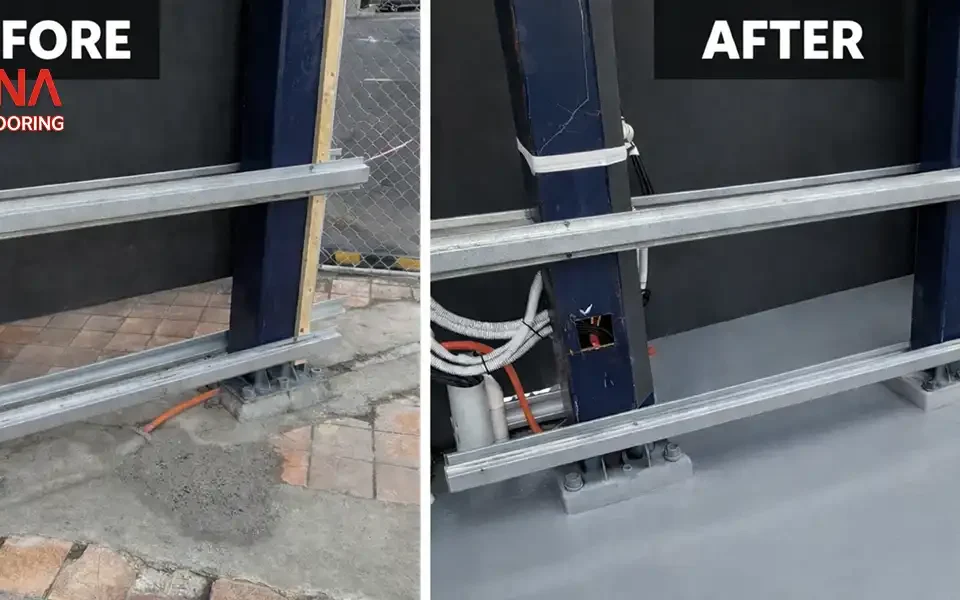
This is where most of the outcome is decided. The concrete needs to be grease-free, dust-free, and structurally sound. Any cracks or holes get patched, and the surface is usually mechanically ground or shot-blasted to strip away contaminants, old coatings, and weak material while creating the rough profile the epoxy needs to actually grip onto. Skip this step, or rush it, and the coating will lift or peel down the track — no matter how good the epoxy itself is.
Checking for Moisture in the Slab
A concrete slab can hold excess moisture even when it looks bone dry on the surface. If that’s not picked up before installation, the moisture pushing up through the slab can affect how well the coating bonds and lead to bubbling or the floor lifting away from the concrete later on. A good installer will test the slab for moisture and choose a suitable primer or a moisture-tolerant system where it’s needed, rather than just assuming the floor is dry enough.
2. Priming
A primer isn’t used in every system, but where it is, it seals the concrete’s pores, improves adhesion, and gives the following coats a more even base to sit on. How long it needs before the next coat goes on depends on the product, the condition of the slab, and the temperature and humidity on the day — so it’s a case of following that specific product’s recoat window rather than a fixed rule of thumb.
3. The Epoxy Coat (or Coats)
This is the main build of the floor — one or more layers of epoxy, rolled or squeegeed on depending on the thickness and finish you’re after. Recoat and cure times vary between products and are affected by temperature, humidity, and how thick each coat is laid. Going back in too early, or outside that product’s recoat window, is one of the more common mistakes, and it shows up later as poor adhesion between coats or a cloudy finish.
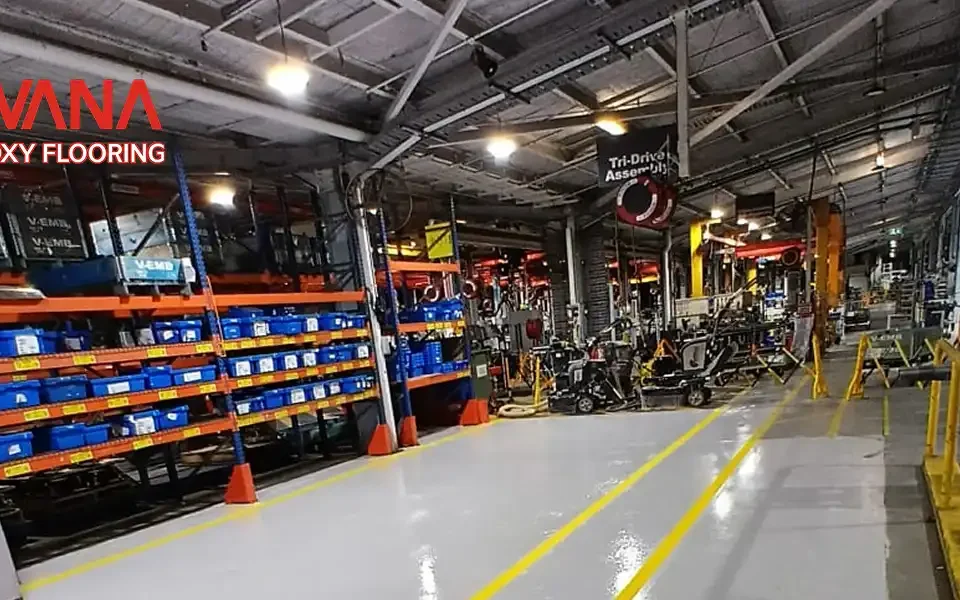
Epoxy coatings generally fall into one of three types: water-based, solvent-based, or 100% solids. Water-based products tend to have lower odour and VOCs, which suits homes and other occupied spaces, though performance still varies by product. Solvent-based products can give strong adhesion and a glossy finish but need proper ventilation while they cure. 100% solids systems lay down a much thicker dry film and are what’s typically specified for demanding commercial and industrial floors. Which one’s right depends on the slab, the traffic the floor needs to handle, and how much downtime the space can afford during installation.
4. Topcoat
Depending on the system, a compatible polyurethane, polyaspartic, or purpose-built UV-resistant topcoat can be added for extra abrasion, chemical, and colour protection. Not every epoxy product is UV-stable, so for anything exposed to direct Brisbane sun — a driveway or an open garage, say — you need a finish that’s actually designed for that exposure, not just any clear coat.
Sticking to the Manufacturer’s Specifications
Every epoxy product has its own mixing ratio, recoat window, and full-cure time, and these aren’t just suggestions — they’re what the coating was tested against. A good installer will follow the manufacturer’s application guidelines to the letter rather than working off habit or guesswork, since even small deviations in mix ratio or temperature during application can affect how well the floor cures and how it performs over time.
The Main Styles of Epoxy Flooring
Not every epoxy floor looks the same, and the right style depends on the room and how it’s used.
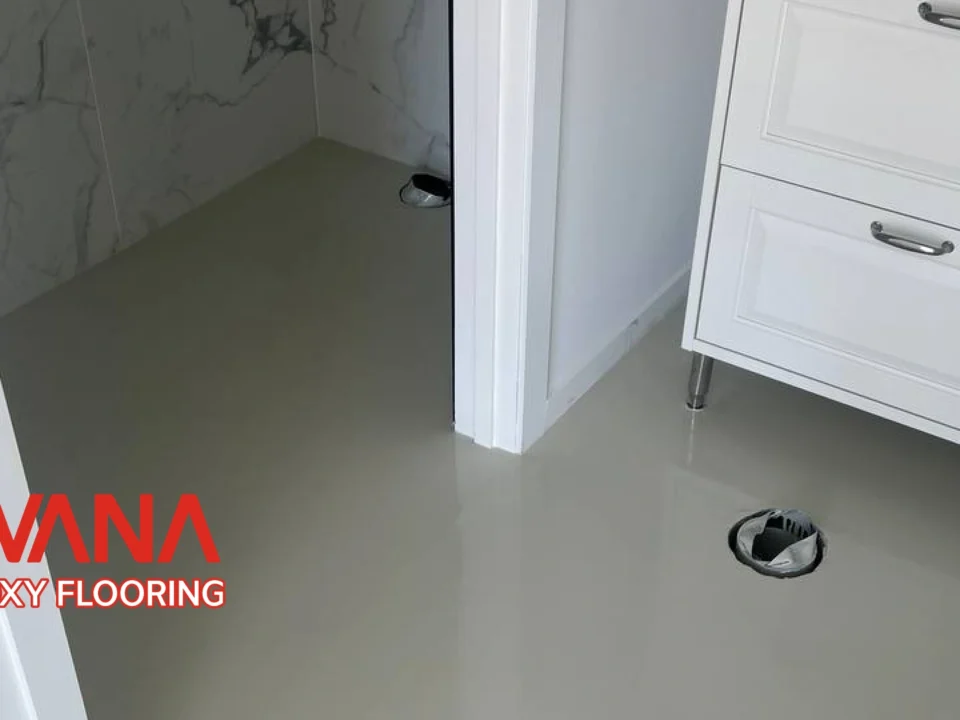
Self-levelling epoxy gives you a smooth, glass-like, single-colour finish. It’s the go-to for showrooms, living areas, and any space where you want a clean, modern look.
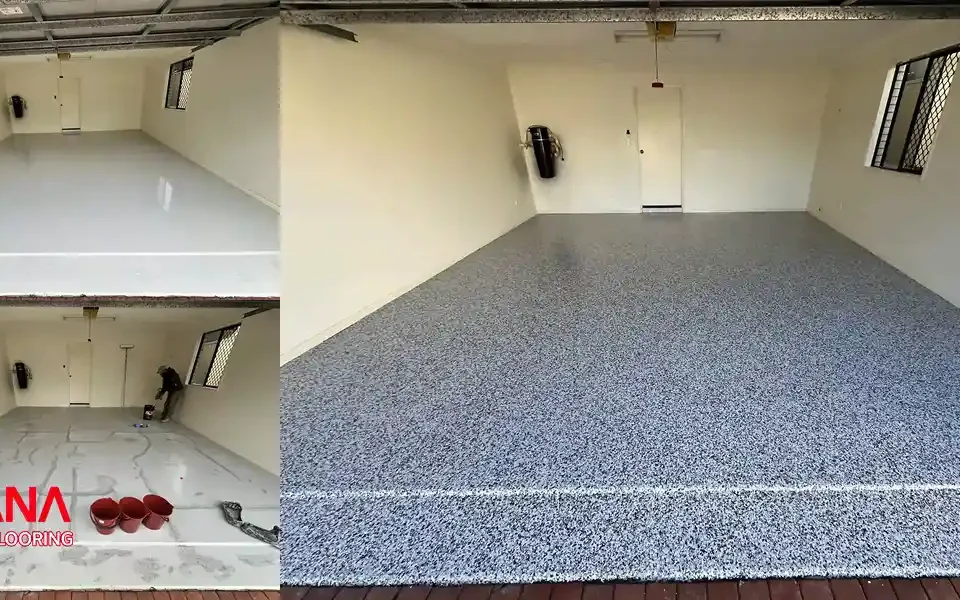
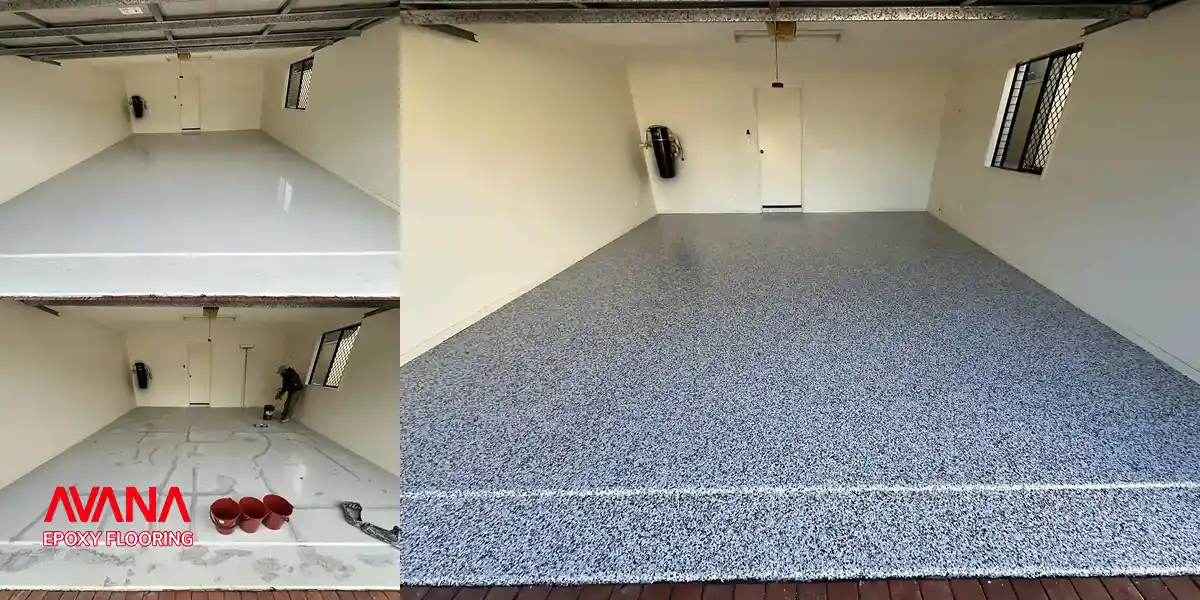
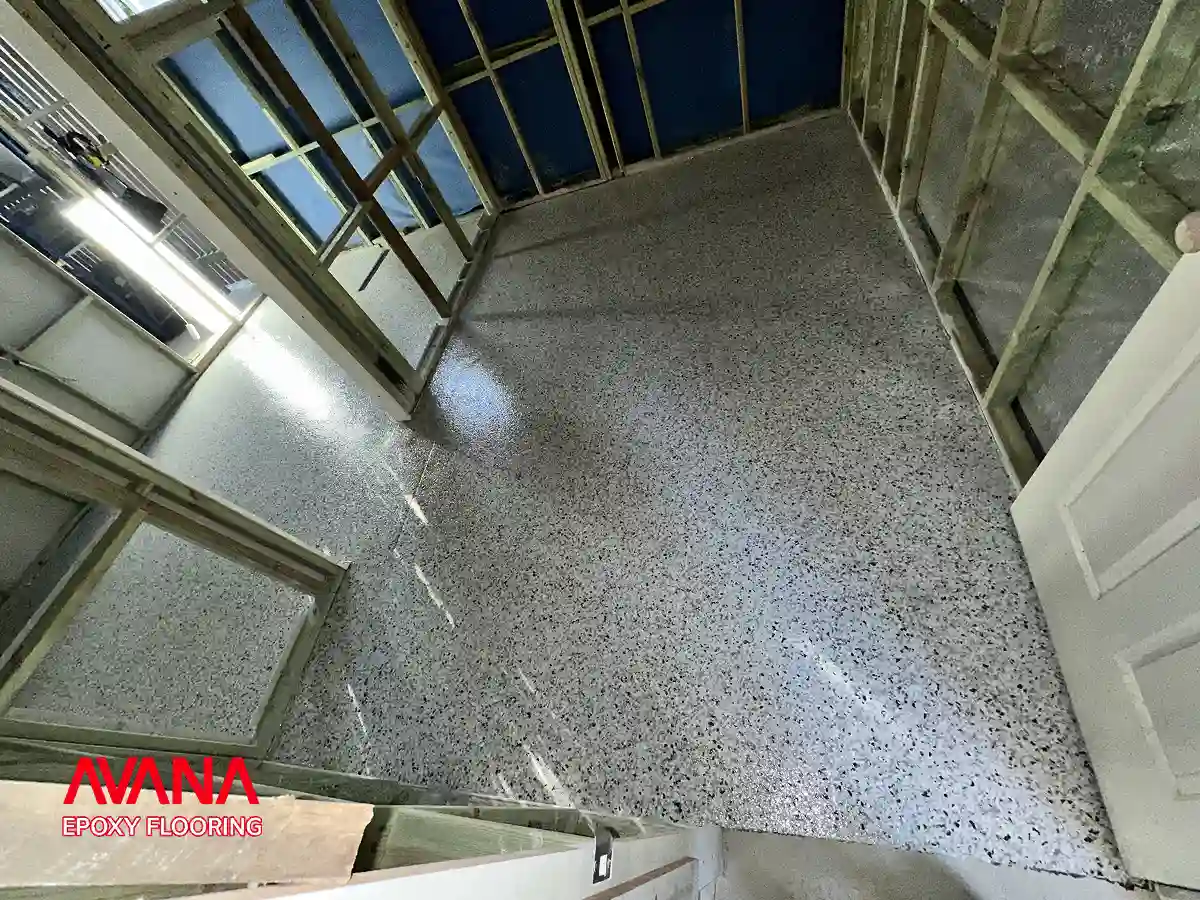
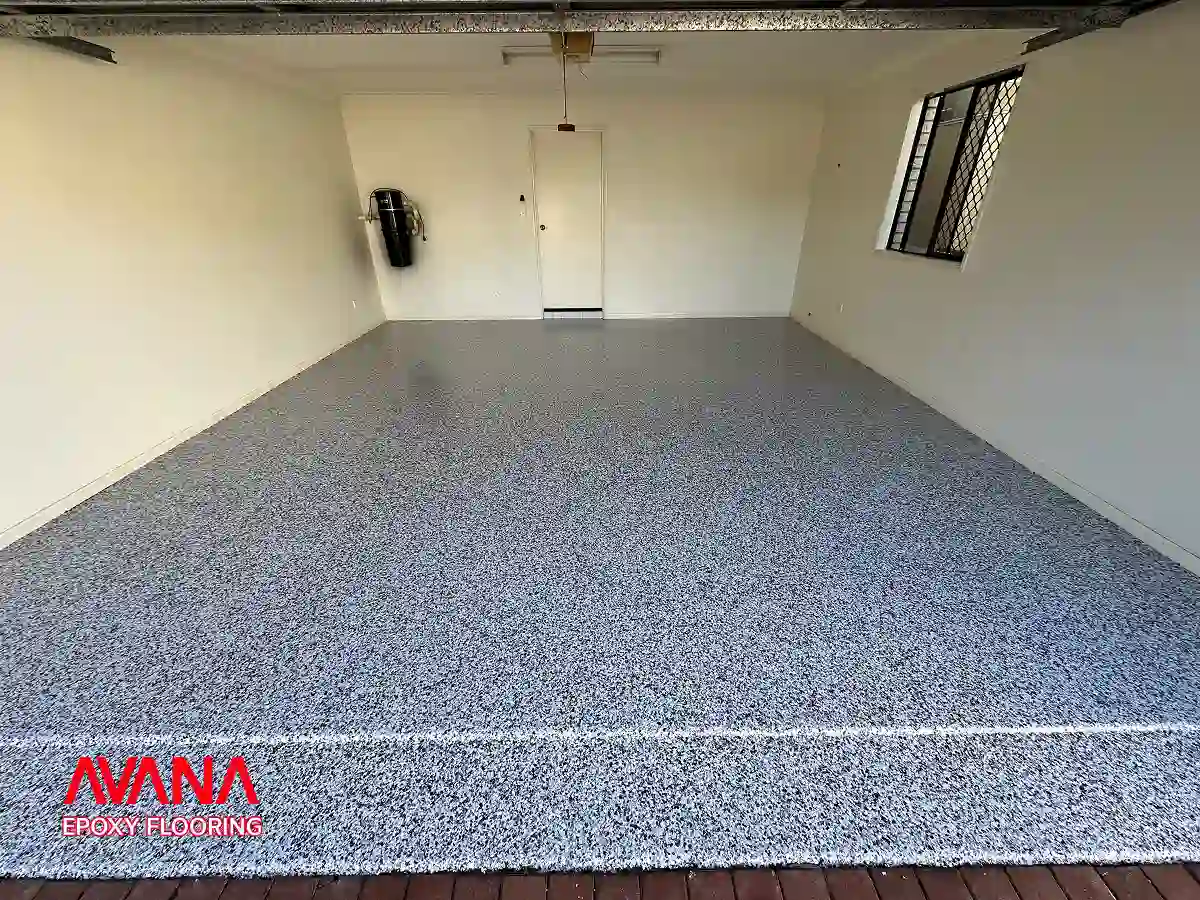
Flake epoxy mixes coloured vinyl chips into the coating for a decorative, textured look. It’s a popular choice for garages, basements, and workshops, and where extra grip underfoot actually matters, it can be paired with an aggregate and topcoat built for slip resistance.
Metallic epoxy uses reflective pigments worked into swirling, marble-like patterns. It’s the showstopper option — the kind of floor people ask about — and suits feature areas like entryways, living rooms, or hospitality fit-outs.
Quartz-filled epoxy brings in coloured quartz aggregate for a textured, durable surface. Depending on how the system’s built, it can offer better slip and chemical resistance, which makes it a common choice for kitchens, bathrooms, and other spaces that need to stay hygienic and safe underfoot.
Colours and Custom Designs
One of the things people are often surprised by is just how much design flexibility epoxy actually offers. Solid colours are the simplest option, but they’re far from the only one.
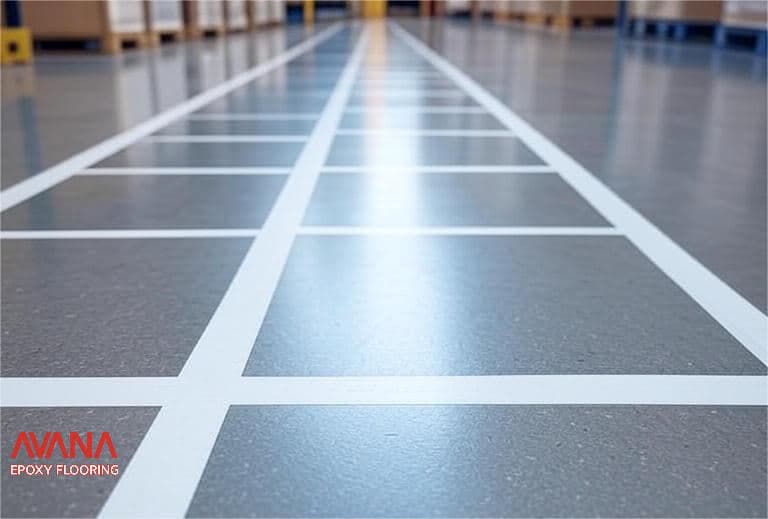
Stone-look finishes use blended pigments to mimic the look of marble, granite, or natural stone, without the cost or upkeep of the real thing. Geometric and pattern work — borders, line-marking, or contrasting colour blocks — suits showrooms, retail spaces, and warehouses that want clear visual zoning as well as a good-looking floor. For a genuine feature floor, metallic pigments can be worked through the coating to create real movement and depth that a flat colour simply can’t match.
Because the finish is built up in layers rather than laid piece by piece, there’s room to combine colours, blend flake mixes, and tailor line-marking to the space — so the floor doesn’t have to be an afterthought, it can be part of how the space looks and functions.
Why Brisbane Homes and Businesses Keep Choosing Epoxy
Brisbane’s humidity, rainfall, and strong sun ask a lot of any floor. A properly specified epoxy system can hold up well against everyday wear, surface moisture, oils, and many common spills — though moisture coming up through the slab needs to be assessed before installation, and how resistant the floor is to particular chemicals really does depend on the product and system used.
It’s also low-maintenance, though “low-maintenance” doesn’t mean “no maintenance.” A sensible routine keeps the floor looking good for years rather than just the first one:
- Sweep or vacuum regularly to keep grit from being ground into the surface underfoot or under vehicle tyres.
- Mop with a pH-neutral cleaner rather than harsh degreasers or acidic cleaning products, which can dull the topcoat over time.
- Wipe up spills promptly — epoxy resists staining well, but oils and chemicals left sitting for extended periods can still affect the surface.
- Use mats or protective pads under heavy equipment, furniture legs, or anywhere sharp or heavy objects get dragged across the floor.
- Skip the wax and polish — epoxy doesn’t need it, and some products can actually leave a hazy film on the gloss finish.
And because it’s installed as one continuous coating rather than individual tiles or planks, there are far fewer joints and gaps for dust and moisture to collect in — a genuine plus if you’re after a floor that’s easy to keep on top of, not just tidy-looking.
Choosing the Right Epoxy Floor for Your Space
A few things are worth thinking through before you settle on a finish:
- What’s the space used for? A busy warehouse floor has different demands to a showroom or a living area.
- How much wear will it take? Light foot traffic in a living room or showroom can usually be handled by a thinner, decorative system. Garages, workshops, and commercial floors under regular vehicle or equipment traffic generally need a thicker, high-build system with more coats to handle the load without wearing through.
- What condition is your concrete in? Cracks, moisture issues, or old coatings all need addressing before any epoxy goes down.
- What look are you after? Solid colour, flake texture, or a metallic feature finish will all suit different rooms and different tastes.
If you’re weighing this up for a commercial or industrial space specifically, have a look at our warehouse epoxy flooring, workshop epoxy flooring, commercial kitchen epoxy flooring, and industrial epoxy flooring pages for more on the systems suited to each.
What Affects the Cost
Every epoxy job is priced individually, so we won’t pretend there’s one number that fits every floor — but a few factors consistently drive the cost up or down:
- Condition of the existing concrete. A slab with cracks, old coatings to remove, or moisture issues needs extra prep work before any epoxy goes down.
- Size and layout of the space. Larger, more open areas are generally more efficient to coat than small or heavily obstructed spaces.
- System and finish chosen. A basic single-colour system costs less than a multi-layer flake, quartz, or metallic finish.
- Number of coats and thickness required. Higher-traffic spaces that need a thicker, more durable build naturally take more material and labour.
- Access and site conditions. Ventilation, access for equipment, and whether the space needs to stay partially operational during installation can all affect the timeline and cost.
The best way to get an accurate figure is a proper on-site assessment rather than a rough estimate over the phone.
Getting It Installed Properly
Epoxy flooring rewards good preparation and punishes shortcuts. An experienced installer will assess your slab, recommend the right system for how the space is actually used, and handle the prep work that largely determines how durable the floor is and how long it holds up.
If you’re in Brisbane and ready to talk through your options, get in touch with the AVANA Epoxy Flooring team — we’re happy to walk you through what’s realistic for your space.