
It’s pretty normal to stare at a tired, dated tile and feel stuck. Do you really have to deal with the insane mess and cost of tearing it all out? There has to be a better way, right? So then epoxy pops into your head.
Maybe it’s just a quick band-aid, or maybe, if you get it right, it’s a legit, long-term solution. Honestly, epoxy flooring over tiles can work. It can be incredibly tough and look fantastic, but the secret’s all in the prep. And not every room is the same.
What works for a kitchen might not be ideal for a bathroom, they’re just different beasts. From our day-to-day projects at AVANA Epoxy Flooring, I can tell you it’s not a one-size-fits-all job.
This guide breaks down what we’ve actually seen work in real homes, the good and the gritty.
Can You Do an Epoxy Floor Over Tile?
People ask this a lot, usually while pointing at a floor that’s been there for years. “Can epoxy even go over this?” And the honest reply is usually “yeah, it can,” but not in every situation.
Some tiles sit tight and don’t move a millimeter, so working on them feels simple enough. Some others have that tiny wobble you only notice when you walk barefoot, and that part can ruin the whole plan.
Epoxy works over tile, but only when the base behaves. Most of the time you can do it, you just need prep work and a bit of patience.
How to Use Epoxy Flooring Over Tiles
Before anything else, you have to slow down and look at the tiles the way they actually are, not the way you want them to be. Dust, grease, old cleaners, all of that hides in places you don’t notice at first. That gets cleaned out, properly, or nothing works later.
The surface then needs to be scuffed so the epoxy can hold on instead of sliding around. Any loose tile or uneven spot gets fixed before moving forward.
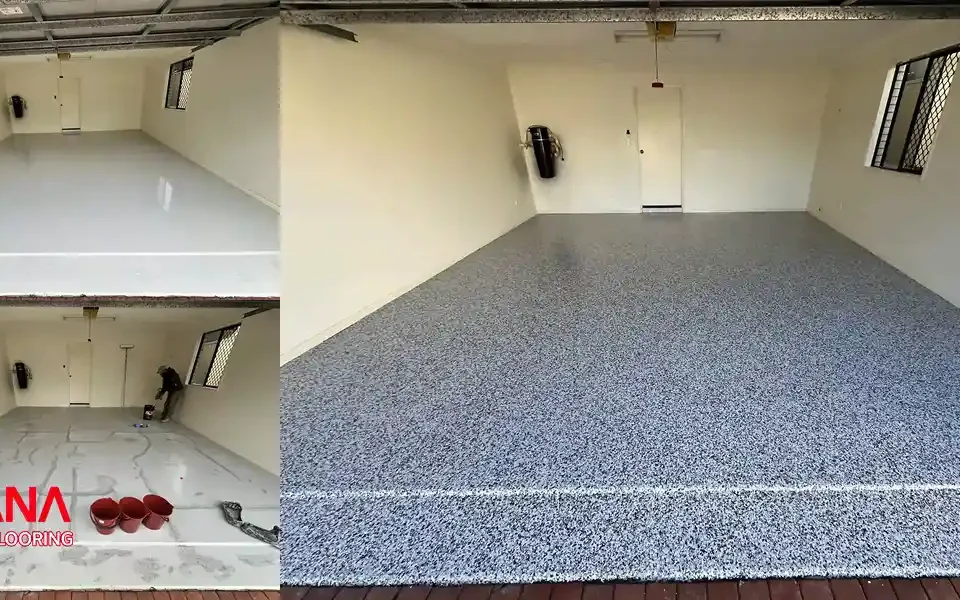
A primer comes next, quietly doing its job. After that, epoxy goes down in stages. Give it time. Floors don’t like being rushed.
Epoxy Flooring Over Tiles Pros and Cons
No floor choice comes without trade-offs, and it helps to admit that from the start. When people talk about epoxy flooring over tiles, it usually turns into a mix of excitement and second thoughts.
Some features sound great on paper, then feel different once you live with them.
A surface that works beautifully in a low-traffic space can feel annoying somewhere you walk on all day. That’s why it makes sense to look at both sides without overselling anything.
Before getting into the good stuff, it’s better to talk about the drawbacks first. Knowing what can go wrong tends to lead to better decisions later.
What Are the Disadvantages of Epoxy Flooring?
Let’s talk straight about the not-so-great parts. Going for epoxy flooring over tiles is smart, but it’s essential to know exactly where the headaches might pop up:
- The Prep is Intense: If those existing tiles aren’t totally solid, perfectly clean, and sanded rough, the epoxy just won’t stick. Rushing this critical step is a deal-breaker that leads to failure.
- It Gets Slippery: That beautiful, glossy shine turns treacherous with water. In a kitchen or bath, adding anti-slip grit to the topcoat is absolutely mandatory for safety.
- No Give At All: It’s a hard surface. Dropped glasses will shatter instantly, and your feet and back will feel the fatigue after standing for long periods.
- Best Left to Pros: The precise mixing ratios and perfect timing between coats are extremely tricky. A professional installation is what ultimately ensures the longevity of the finish.
Advantages of Epoxy Flooring Over Tiles
Now for the good stuff, this is honestly why so many people, including our happy clients at AVANA Epoxy Flooring, choose this route. The perks are seriously compelling.
- A total facelift: It completely transforms a space. You get this stunning, seamless surface that hides old, ugly tile patterns for good. The design options are pretty much endless.
- Tough as nails: Once it cures, a proper epoxy flooring over tiles job is incredibly resilient. It laughs at stains, moisture, heavy use, and chemical spills.
- Effortless to clean: No more grout lines to scrub! Spills wipe right up from the smooth, non-porous surface. A quick mop is all it usually needs.
- Cost-smart: Compared to the demo, disposal, and cost of brand-new flooring, going right over your old tiles is often way easier on your wallet.
Our entire goal at AVANA Epoxy Flooring is to make sure your floor delivers every one of these benefits while we minimize all the potential downsides through our process.
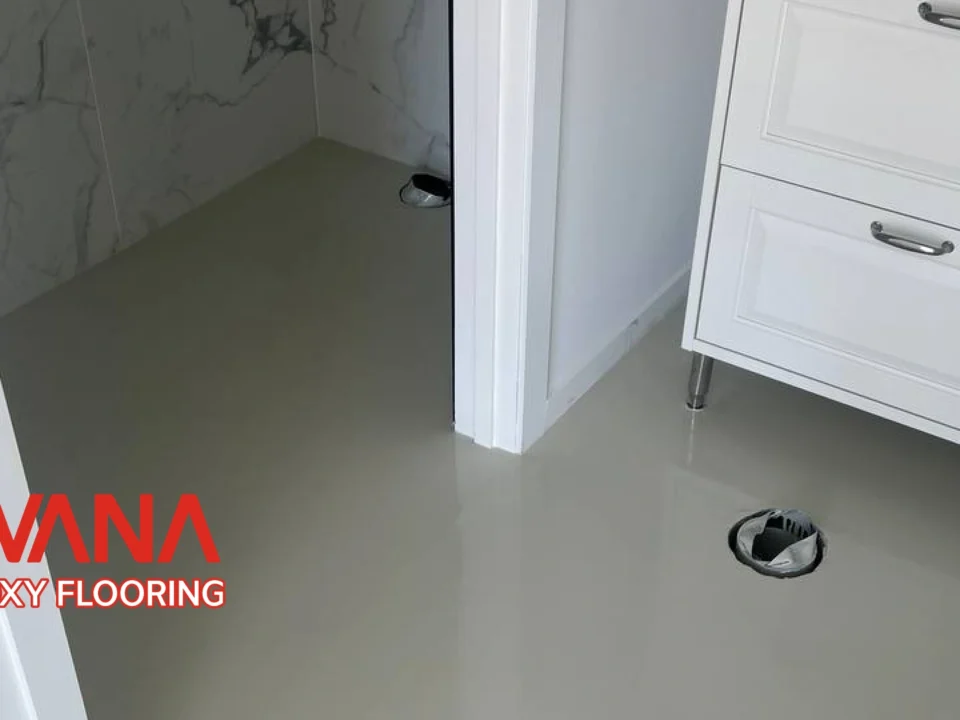
How to Use Epoxy Over Tile Bathroom Floor
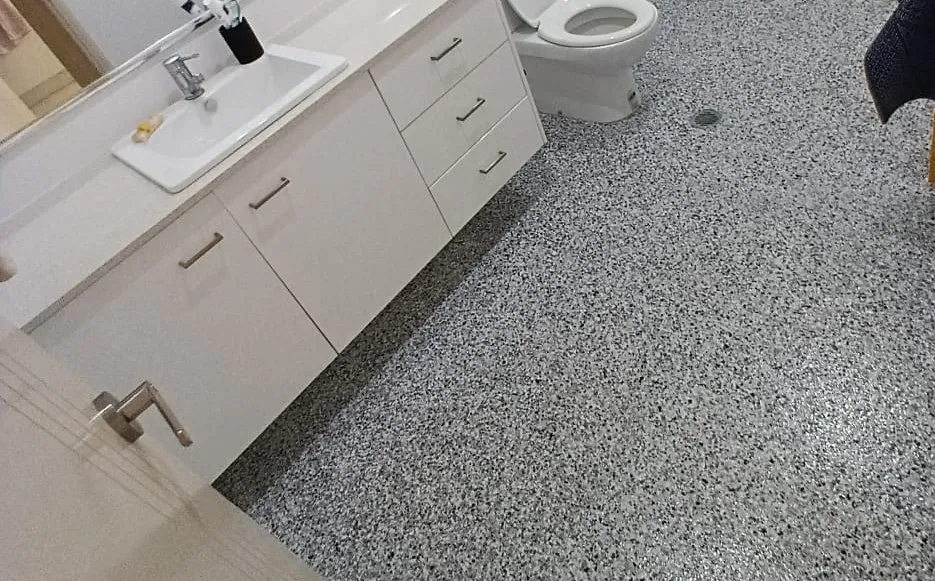
Alright, tackling a bathroom is a bit of its own animal when it comes to epoxy flooring over tiles. You really have to nail the details because of all the moisture.
First, ventilation is key. Open a window, run a fan, you need air moving. The prep is even more critical here. Scrub every inch to kill mold or soap scum in the grout. That rough-sanding step? Non-negotiable for grip in a wet room.
When choosing your epoxy, go for a 100% solid formula meant for wet areas. Mix in anti-slip aggregate into the topcoat, this isn’t optional, it’s a safety must.
Apply it in thin, even layers, and be religious about the cure time between coats. Don’t use the shower for at least a few days after. Patience here makes a floor that lasts for years, not months.
Kitchen Epoxy Over Tile
Kitchens play by their own rules, and that’s probably why epoxy flooring over tiles tends to make more sense there than people expect. It’s a room that never really rests.
Something is always dropping, spilling, getting dragged across the floor. Oil splashes, coffee drips, footsteps all day long.
Prep can be a bit of a fight, especially with old grease hiding where you don’t see it, so the cleaning has to be serious. But once it’s done, the payoff is clear.
One smooth surface, no grout lines catching crumbs or stains. A quick mop and it’s clean again. Add anti-slip grit, though. Water near a sink changes everything.
How Long Does Epoxy Last on Tile?
On tile, a well-done professional epoxy flooring over tiles installation can easily last 10 to 20 years. Maybe even longer in a low-traffic area.
But, and it’s a big but, its lifespan hangs entirely on two things. First, the quality of the prep and installation. If the tiles weren’t prepped perfectly, it might start chipping or peeling in just a couple of years.
Second, it depends on the wear and tear. A busy kitchen floor will show scuffs and need a refresher coat sooner than a guest bathroom.
Think of it as a long-term investment that needs a perfect start. With that foundation, you’ll get well over a decade of service from it.
What Is the Best Flooring to Put Over Tiles?
Honestly, this comes up all the time. People are fed up with tired tiles, but the idea of ripping everything out sounds messy, expensive, and exhausting. So the question becomes simple: what can you put over it and move on with your life?
There are a few routes. Some go with luxury vinyl planks, others look at engineered wood. They all have their place. But when moisture is part of the picture, or the space takes a lot of daily abuse, epoxy flooring over tiles starts to stand out.
It doesn’t sit on top like a temporary layer. It bonds to what’s already there and turns it into one solid surface. No seams. No grout lines. No water sneaking through.
That said, the result depends heavily on how it’s done. Prep is detailed, timing matters, and mistakes show later. That’s why professional work makes a difference.
At AVANA Epoxy Flooring, we help homeowners replace dated tile with durable, good-looking floors across Brisbane, the Gold Coast, Sunshine Coast, Ipswich, and Logan.
If you want straight answers or a clear quote, call us at 1800 28 26 21. We’ll talk it through, no pressure.